-

Highway Crash Barrier
$0.00 -
Thrie Beam Guardrails
$0.00 -
Road Safety Guardrails
$0.00
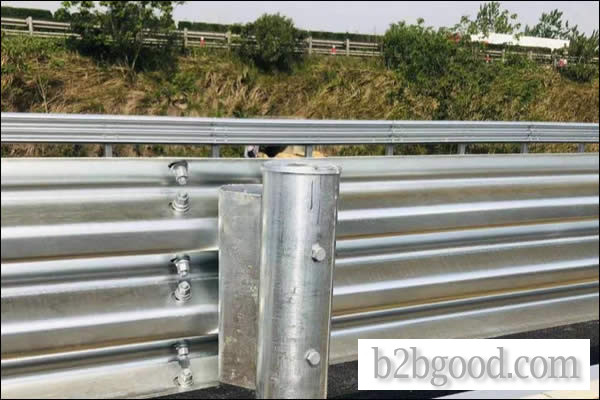
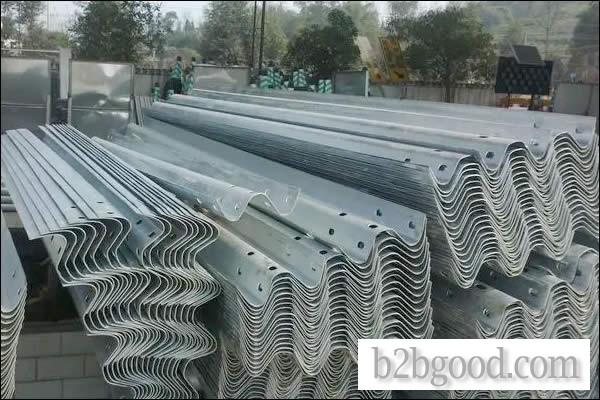
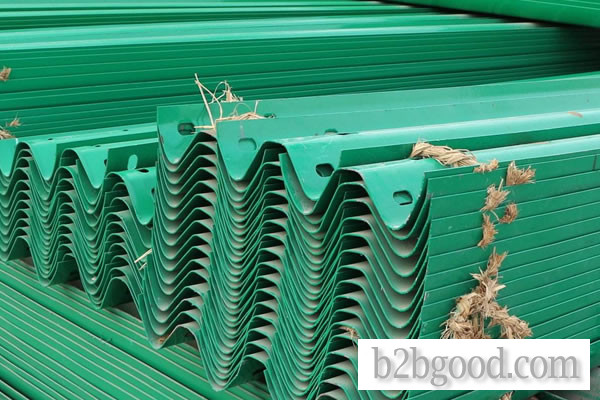

- Highway Security and Protection Barrier System-Light beam-type guard railway, postal service, derailer, patternSet cement obstacles
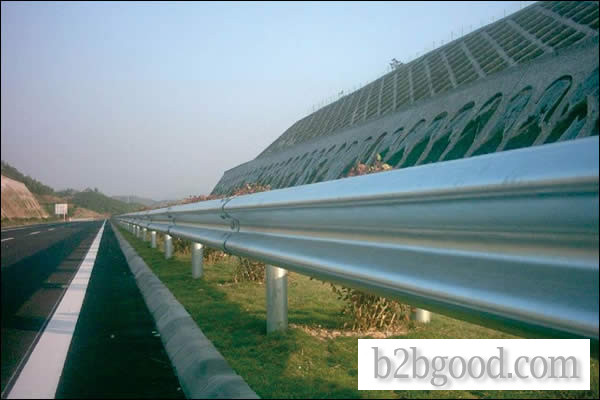
Highway safety barriers are widely used for the safety of highways and bridges. They are installed on the side of the road, especially on curves and slopes, to prevent vehicles from leaving the road. Highway safety barriers are also known as traffic safety barriers.
Characteristics of the highway safety protection barrier:
- The system ensures that the vehicle and its users suffer minimal damage
- During the collision, the beam passed through a smooth surface and absorbed the maximum amount of energy, rendering the vehicle unable to move.
- By gradually reducing speed and effectively rerouting the vehicle back onto the highway, controlling the exit angle, preventing the vehicle from sliding back into the transport mode.
- Can be quickly repaired in the event of an accident.
- All components have been stimulated to achieve a longer lifespan.
Applicable
- Provide guardrail protection for motor vehicles in dangerous road areas such as steep slopes, high embankments, vague curves/baskets, sharp corners, etc.
- Absorb sudden impacts during collisions, thereby minimizing damage to vehicles and passengers.
- Serve as a guiding barrier for vehicles moving in the correct direction.
- Serve as a mid-level barrier to avoid hitting the head
- Serve as a protective barrier for pedestrians along the road.
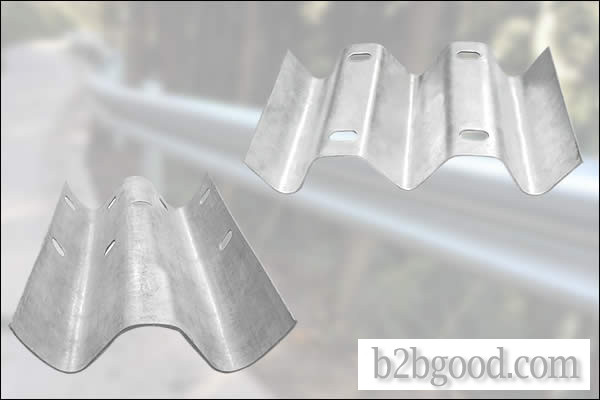
- Thermal specifications: 4320*310*83*3 millimeters, available sizes vary
- Profile: w-beam; hyie-beam
- Standard: JT/T 281-1995, AASHTO M-180, RAL-RG620, SPS98S, any other international standards.
- Base steel: Steel grade Q235B (equivalent to S235JR/DIN EN10025 and Gr.D/ASTM A283M)
- Steel thickness: 3 millimeters, 4 millimeters, 6 millimeters, or custom sizes
Hot bubbles or PVC coating
- Thickness of vibration: 70 millimeters, or customized
Description of Materials and Construction Projects for the Guard Railway of the Highway Safety Barrier System
1) Protection workers and line division workers
Light Beam Escort Railway: 3 millimeters minimum, weight per meter of 11.3 kilograms
Gravity Cat Eye/Reflector
Intense wire network barrier
Crash, crash
Terminal Terminal
Chinese Gate Obstacle
High alert system
2) Archive
Any shape, pattern, color (6 centimeters thick), square meters 2, shape, pattern, color (6 centimeters thick)
Translate any shape, pattern, or color (8 centimeters thick) into m2.
Ceramic tile shapes of any form, double-sided, colored, m2
The label can be seen, remains intact, and indicates the brand name and contents.
Mortars, additives, and gypsum with hall markings are proven to meet specific standards.
provided sample:
& bull; Waterproof and anti-crack film (B)
& Bull; Latex liquid, half a liter, includes manufacturer's data
& bull; Dried mortar compound, 1 kilogram
& bull; Complete set of tile grids, 1 kilogram
3) Cement barriersThe separation wall system requires:
Universal size and design
Category A Kerb (35 x 15 centimeters) m
(40x20 centimeters) m
(40x20 centimeters) m
Pre-broadcasted Flush Kerb m
Preset concrete barrier, including painting (on one side)
Pre-laid concrete barriers, including paint (double-sided)
Dwarves retain the long walls m
Leakage Path (Any Type)
Highway Security and Railway and Subdivision Work:
Liang, positions, and alliances
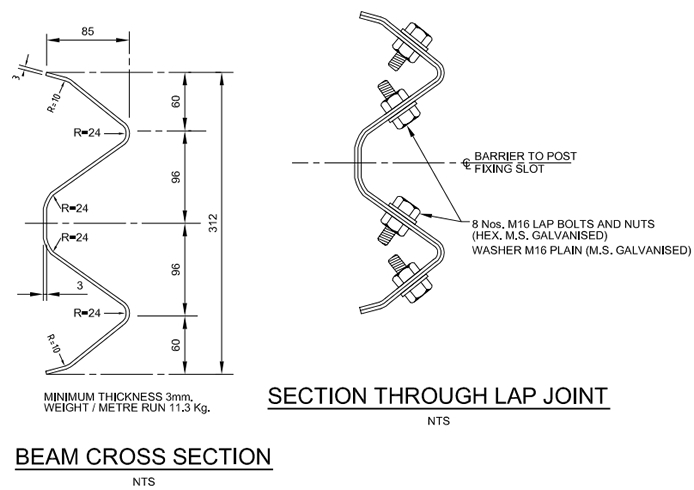
Hexagon-shaped headboards and washer installation
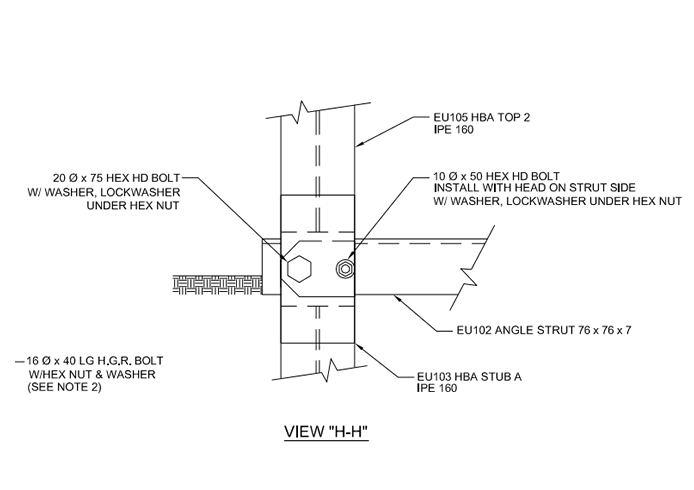
Highway Safety and Security System
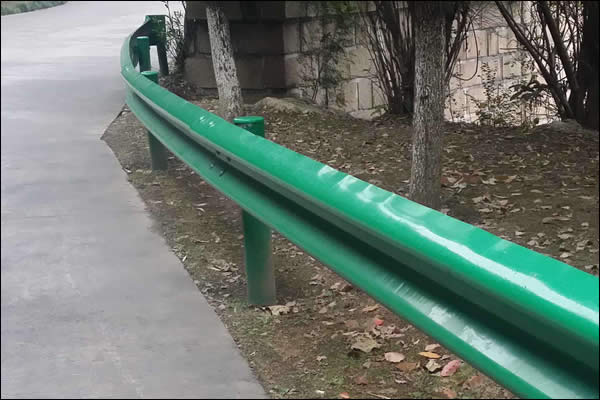
Traffic Safety Barrier, Polyvinyl Chlorine Fence
3. SELEC 116; Highway Safety Obstacle System
Treat performance standards as the top priority
Minimum Performance Standards
The minimum performance level of the National Highway Safety Barrier System is the 350 NCHHRP Level 3 Test (TL-3). However, in many cases, it is necessary to comply with higher test levels, as factors such as traffic conditions, traffic volume, composition, and the cost-effectiveness of various safety alternatives must be taken into consideration when designing highway safety barrier systems.
Designers should consider all relevant factors and determine the performance level required for roadside/intermediate barriers on a case-by-case basis.
(a) Standard roadside protection is considered a TL-3 obstacle, but certain features, such as school playgrounds near the toe of fill embankments outside high-speed lateral curves, require higher performance roadside barriers.
(b) In heavy and/or hazardous cargo traffic, a TL-4 barrier is usually required for at least one vehicle.
(c) Higher performance barriers, namely the TL-5 barrier, equipped with a 36,000 kg truck, or the TL-6 barrier, equipped with a 36,000 kg tanker, should be used in locations with a high proportion of heavy vehicles;
And dangerous goods vehicles in the traffic flow, if such vehicles penetrate or cross barriers, will result in serious consequences.
(d) The standard bridge-side protection is a TL-3 type obstacle, but the edge protection standards in the 'Crossing New Zealand Bridges Manual' (the 'Bridge Manual') often require the provision of TL-4 type obstacles. In most cases, these obstacles will be equipped with a 8,000 kilogram truck.
The "Bridge Handbook" provides methods for determining the appropriate barrier testing levels for any specific situation. These methods must be followed when dealing with bridge obstacles. The methods are also relevant for determining the appropriate testing levels for roadside and intermediate obstacles.
4. Types of Highway Safety Obstacle Systems
Consider using different types of highway security and railway protection in various locations and for different purposes.
Roadside obstacles and intermediate obstacles
Highway safety and the three main types of protective barriers and median barriers:
(a) Flexible System
Flexible barrier systems, such as wire fences, are generally wider than other types, as most of the impact energy is dissipated due to the deflection of the barrier, resulting in less force applied to vehicles and their passengers.
All wire fence barriers permitted for use on state highways have different deflection characteristics for a certain national human rights center's 350 test levels.
(b) Semi-hard force system
Semi-rigid wall barrier systems, such as W-Beam and Trie-Beam barriers, are the most commonly used road safety barrier types in New Zealand. These systems primarily transfer the impact load to nearby sentries through relatively strong steel beams, thereby transferring the load to the ground and diverting traffic.
Compared to the flexible system, the semi-rigid wall barrier system has much less lateral bias.
Examples of semi-rigid highway safety barrier systems in New Zealand include:
& bull; Intense W- Beam background - TL-3
The powerful postal service has modified Thrie-Beam - TL-4.
(c) Hard System
Hard wall systems, such as concrete barriers, directly transfer the impact load of vehicles to the ground. They resist the impact through the inertial resistance of the barrier's mass and its sliding resistance on the ground. The design of these barriers aims to absorb the impact energy by partially lifting the vehicle and controlling its behavior after impact.
The solid barrier did not exhibit lateral deflection.
Bridge obstacles -- Road safety obstacles on the bridge
The road safety obstacles on bridges are often designed similarly to those on roadside, but the obstacles on the roadside are unique when designing bridges.
The bridge obstacles must meet the requirements of the "Bridge Manual".
Currently, guidelines for modifying guardrails to existing bridges are being developed.
4.3 Collisions, collisions, and terminal stations
At the end of the barrier lies a major concern. When it is easily affected positively at the end of the barrier, it is necessary to provide collapse-resistant terminal treatment that meets the standards of the 350 TL-3 National Human Rights Center.
4.4 Transition
Non-hard wall barriers should be gradually strengthened by connecting them to more solid objects, such as bridge barriers, sturdy walls, partition walls, or other structural supports. The transitional design should create barriers that allow the vehicle's impact force to be smoothly redirected without causing damage to the barrier or getting stuck inside it.
5.2 Collision, collision
The design of various collision pads includes: metal beam "bubble" accelerators.
5.3 Aesthetic and Environmental Considerations
Although aesthetics are a consideration, they are usually not the deciding factor in choosing a side protection barrier, except in environmentally sensitive areas such as entertainment venues or parks. In such cases, the system used must be capable of failure and acceptable to road management authorities.
During the selection process, environmental factors must also be taken into consideration.
For example:
& Bull; The presence of significant obstacles in the forward area may help to accumulate sand or snow in certain areas.
& Bull; Metal guardrail barriers may deteriorate rapidly in highly corrosive urban/industrial environments.
In some cases, sturdy barriers may limit the line of sight for drivers entering from side roads or intersections, or may obstruct the driver's view of the panoramic view of the special scenery.
Roadside Barrier System Maintenance
6.1 Routine Maintenance
The regular maintenance costs are similar to those of all operating roadside barrier systems. Sometimes, additional cleaning and painting are also required. However, the use of preservatives on wooden stakes and galvanized steel components almost eliminates the need for this work. It may be necessary to reinforce the cable barrier system periodically. The application of cement barriers may incur ongoing maintenance costs. Some systems may interfere with roadside trimming and vegetation control. Other systems may also affect roadside trimming and vegetation control.
6.2 Collision Maintenance
The number of repairs and costs associated with vehicle collisions play an important role in system selection. The number of impacts that may occur along certain parts of the obstacle line depends on several factors, mainly traffic speed and volume, road adjustments, and the distance between the edge of the traffic lane and the face of the barrier. The extent of damage caused by any specific impact depends on the strength of the system.
In areas with extremely high traffic volumes and frequent obstacles, such as urban highways and expressways, it is difficult to repair obstacles without disturbing road users. The cost of collision maintenance can become a paramount consideration. Therefore, in these locations, especially in medium-scale applications, hard concrete obstacles (such as "F-type" features) are often preferred.
In the maintenance of collisions involving postal and railway systems, another factor to consider is the capacity of the railway section. It is possible to reuse the pillars after the collision. If the railways can be connected directly, costs may be saved. Of course, in some cases, the railways may be damaged beyond repair. In such situations, the salvage/relic value may be a consideration.
6.3 Material and Storage Requirements
Before choosing a barrier system, it is necessary to consider the future supply of repair materials and their storage requirements. As the number of components increases, the need for storage of spare parts also increases. Therefore, it is clearly beneficial to use a barrier system that consists of a few standardized components that are easy to store and readily available.
Related products

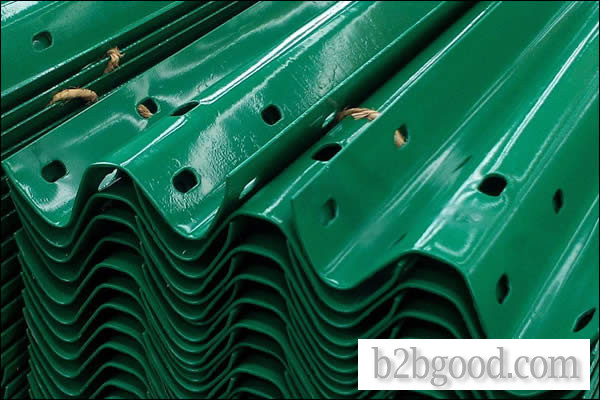
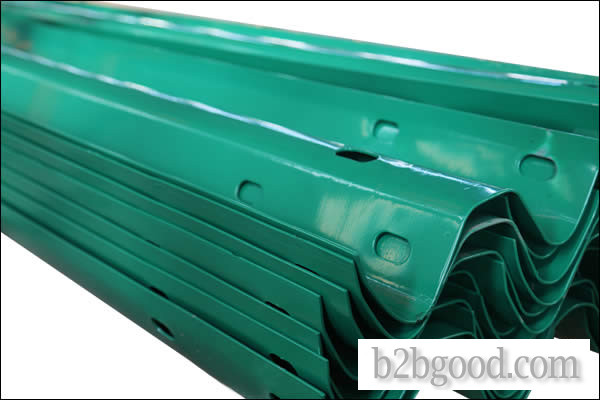
Thrie Beam Guardrails
SX2智能马弗炉热处理灰分退火淬火炉高温箱式电阻炉实验电炉工业

LUB12 standard controll unit

Contact Info
- Address: Dezhou city,Shandong,China
- Phone: +86-15166945837
- Email: dzheibei@sohu.com